Five rooms to explore. They are still being built, but the characters have already moved in. Tap them.
Test version: draft art and text. Tell your coach what you think.
The Hall of Ranks
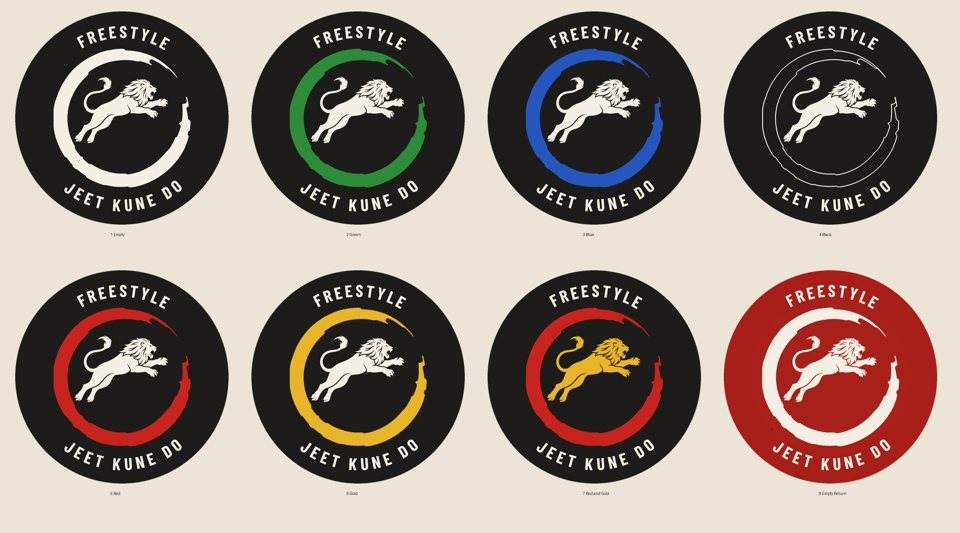
You walked all eight ranks. These are the Freestyle JKD rank patches: the lion inside the ensō.
The Masters' Dojo
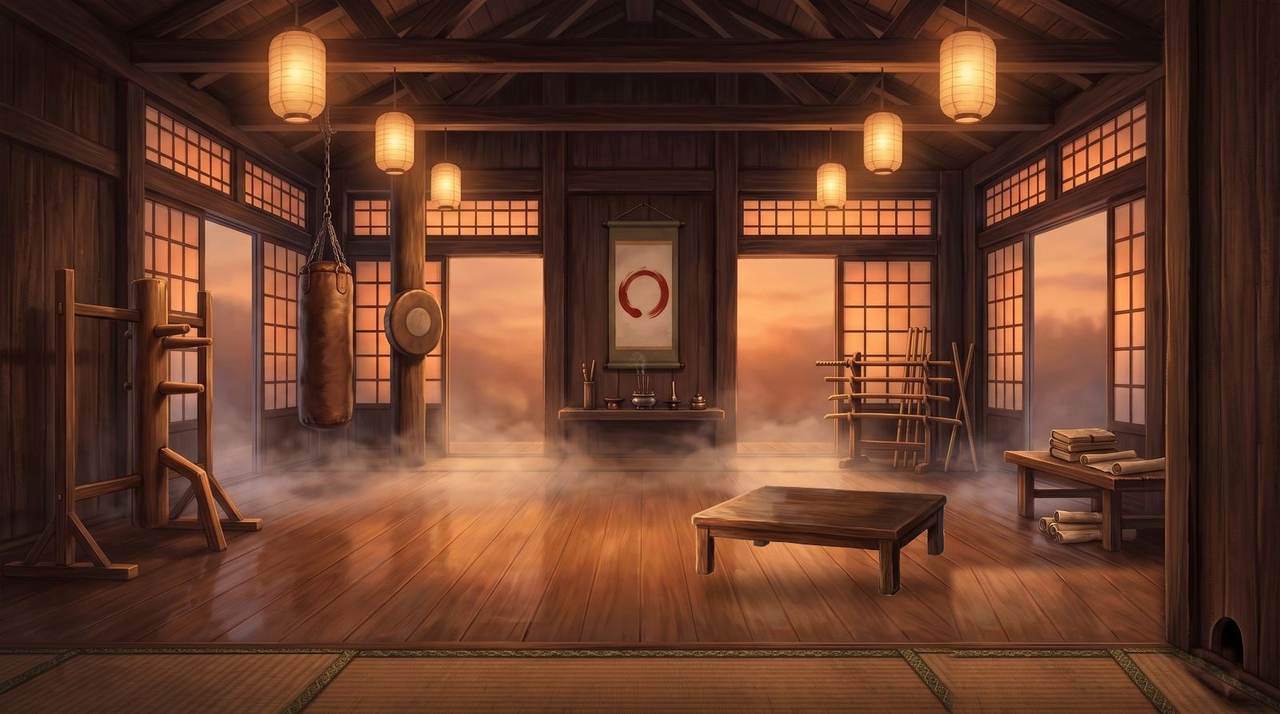
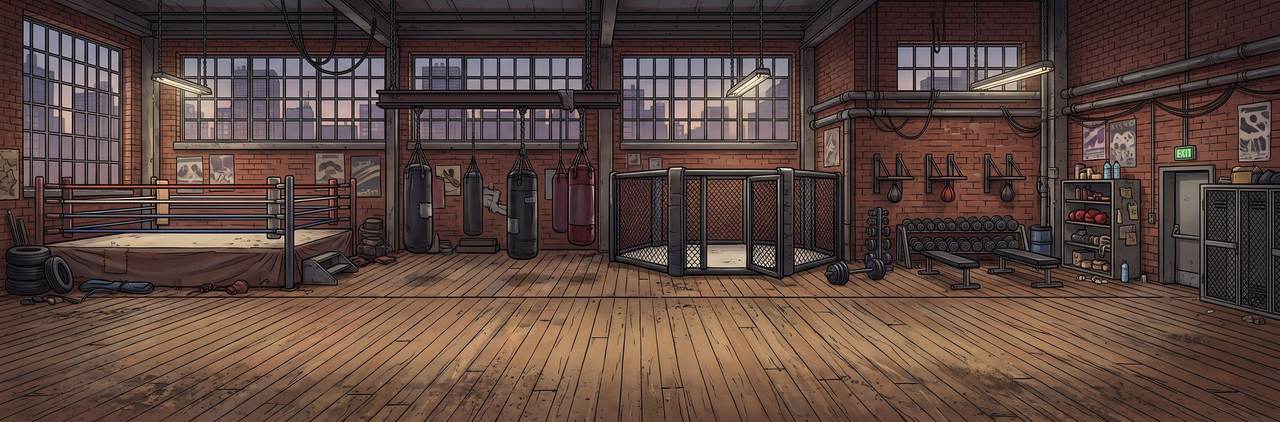
Hands-on training games. Finish a drill to earn an arcade token.
Tap anything in the room.
Practice on the wooden dummy?
Strike each glowing spot as fast as you can. 30 seconds.
Dialogues with the Master
Pick a topic and answer the Master's questions. Each level earns an arcade token.
Tap me
CopperSilverGoldPlatinum
The Martial Arts Library
Read about the arts, their history and the books worth reading. Reading prepares you for the Dialogues.
Animals
Arts and Systems
Historical Figures
History
Legends and Myths
Philosophy
Aurochs and Bulls
The aurochs, the wild ancestor of cattle, roamed Europe, Asia and North Africa and stood up to about 1.8 meters at the shoulder. Cave painters drew it at Lascaux. The last known aurochs died in a Polish forest in 1627. Its power lives on in bulls, and in the bull-leaping and bull-fighting traditions of the Mediterranean.
Brown Bear
The brown bear is one of the largest land predators. The Carpathian Mountains of Romania and Ukraine hold one of Europe's biggest populations. Bears stand on their hind legs to see and smell, and fight with heavy swipes of their front paws.
Elephants
Elephants are the largest land animals alive. Big African bush elephant bulls can weigh around six tonnes. They live in families led by the oldest female, remember water holes for decades, and talk with rumbles too deep for us to hear.
Lions of Europe
Lions once lived in Europe. They spread into the southeast about 6,500 years ago, and their bones match today's Asiatic (Persian) lion, Panthera leo persica, which many researchers now group with the northern lions. On the Black Sea steppe of Ukraine they lived for thousands of years, into the age of the Scythians, whose gold art is full of big cats, and of the Greek colonies on the coast. Herodotus wrote that lions attacked the camels of Xerxes' army in northern Greece in 480 BC. They were gone from Macedonia by about the 1st century AD and lasted in the Caucasus until about the 10th century. Some historians think a few survived even longer in Ukraine: in the 12th century Prince Vladimir Monomakh of Kyiv wrote of a fierce beast that leapt on him and brought down his horse, and some read it as one of the last lions. The Greek myth of the Nemean lion, which Heracles defeated with his bare hands, may keep the memory of these real lions: they had vanished from the Peloponnese around 1000 BC but still roamed the north.
Tiger
Tigers are the biggest striped cats and hunt alone, unlike lions, which live in prides. They are strong swimmers. The Amur (Siberian) tiger lives in the snowy forests of the Russian Far East. Modern studies weigh wild Amur males at about 160 to 190 kg, close to big male lions of southern Africa, so the title of largest cat depends on which population you measure.
Jeet Kune Do
Founded by Bruce Lee in 1967. The name means 'the way of the intercepting fist'. It is a philosophy of combat more than a fixed style: absorb what is useful, discard what is useless, and add what is uniquely your own.
Kudo
Kudo is a Japanese hybrid martial art founded by Azuma Takashi in 1981. Fighters wear a dogi and a face-shield helmet, and use full-contact punches, kicks, knees, elbows and even headbutts, plus throws and short groundwork.
Kung Fu
An umbrella term for the many martial arts of China. The words mean 'skill achieved through hard work', and the hundreds of styles range from animal forms to internal arts like Tai Chi.
Shaolin Kung Fu
The kung fu of the Shaolin Temple on Mount Song in Henan, China, home of Chan (Zen) Buddhist monks. Legends trace its fighting arts back about 1,500 years.
Ninjutsu
The skills of the shinobi of feudal Japan: scouting, stealth, disguise and survival, as well as fighting. Iga and Kōka were its most famous homes.
Pankration
Pankration, 'all power', joined the Olympic Games in 648 BC. It mixed boxing and wrestling with almost no rules: only biting and eye gouging were banned.
Setsukendō
A fictional martial art created for these games. The name means 'the way of the counter fist'.
Ishikawa Goemon
The real Ishikawa Goemon was a legendary outlaw of 16th-century Japan. Kabuki turned him into a folk hero, and the iron 'Goemon bath' is still named after him.
The Shinobi of Iga
Iga, in the mountains of Japan, was home to shinobi families known for scouting, stealth and survival skills.
Tengu
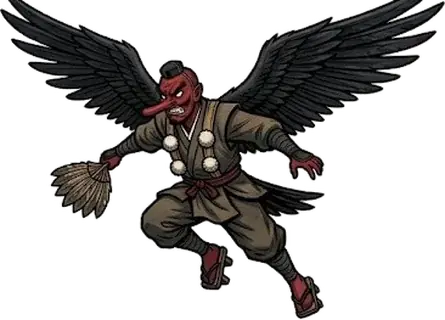
Mountain spirits of Japanese folklore, part bird and part human. Legend says the Tengu of Mount Kurama taught swordsmanship to the young warrior Minamoto no Yoshitsune.
Justice and Injustice
Every society has struggled with who belongs. These pages compare discrimination across times and places, and remember the people who pushed back and the changes they won.
America, the melting pot
Immigrants from every continent built the United States, and their foods, faiths, music and martial arts enrich it today. The same history holds deep wrongs: Native nations were pushed off their lands, as on the Trail of Tears in the 1830s; the Chinese Exclusion Act of 1882 barred Chinese workers; Irish and Italian newcomers faced open hatred, and in 1891 a mob in New Orleans killed eleven Italian Americans; in the 1930s hundreds of thousands of Mexican Americans, many of them citizens, were pushed to leave; Louisiana once punished children for speaking French at school; and in 1942 about 120,000 Japanese Americans were sent to camps. Many of these wrongs were later named and answered: the Civil Rights Act of 1964, and in 1988 a formal apology and redress for Japanese Americans.
China: the 'mean people'
Imperial China opened government posts to anyone who passed the civil service exams, a rare door for commoners. Yet some families were fixed for generations in a 'mean' (jianmin) status, barred from the exams and from marrying outside their group, until the Yongzheng Emperor freed many of them in the 1720s.
Europe: serfs and outsiders
For centuries most Europeans were peasants or serfs tied to a lord's land; Russia ended serfdom only in 1861. Jewish communities were forced into ghettos and suffered massacres, and the Roma were hunted and expelled again and again. Europe also produced the ideas of human rights that would later be used to fight these wrongs.
Feudal Japan: class and outcasts
Edo-period Japan ranked people as samurai, farmers, artisans and merchants, and placed some groups outside the classes altogether. Their descendants, the Burakumin, faced prejudice in jobs and marriage long after the system was abolished in 1871, and activists have worked for their rights ever since.
Latin America: the casta system
In the Spanish colonies people were ranked by ancestry in a 'casta' system, with European-born Spaniards at the top and Indigenous and African people forced into labor at the bottom. The independence movements of the 1800s swept the castas away, and Mexico abolished slavery in 1829, yet the inequalities they left behind are still debated today.
Yasuke
An African man, likely taken from his home as a child, arrived in Japan in 1579 as the bodyguard of the Jesuit Alessandro Valignano. Crowds gathered to stare at him, yet the warlord Oda Nobunaga took him into his service and gave him a stipend, a house and a sword. His story shows both how strangers were seen and how a person could rise in a divided society.
The Way of Earth
Earth is strength and patience: rooted stances, heavy throws, and never giving up your ground.
The Way of Water
Be like water: soft when you must yield, hard when you must strike. Water is timing, angles and flowing footwork.
Seattle, Washington
Tap a place to learn about it.
The city
Seattle stands on the lands of the Coast Salish peoples and is named after Chief Si'ahl of the Duwamish and Suquamish. As a Pacific port it became a meeting place of East and West: the Chinatown–International District, the old Nihonmachi (Japantown), Japanese gardens and temples. The young Master studied here and opened his first school in the city.
Hard history
Seattle's story has dark chapters too. In 1886 a mob drove most of the city's Chinese residents out. In 1942, after Executive Order 9066, Japanese American families were forced from their homes. Seattle's Japanese Americans were held at the Puyallup fairgrounds, called 'Camp Harmony', and then sent to the Minidoka camp in Idaho. Families lost homes, businesses and years of their lives, and the trauma was carried for generations.
Bainbridge Island
Across the water is Bainbridge Island. On March 30, 1942, its 227 Japanese American residents, given only six days' notice, became the first community in the country to be forced out, boarding a ferry under armed guard. A memorial there carries the words 'Nidoto Nai Yoni': let it not happen again.
Puget Sound
Elliott Bay opens into Puget Sound, a deep inlet of the Pacific. Ferries cross it all day, and orcas and salmon still travel its waters.
Mount Rainier
Mount Rainier, called Tahoma by many Native peoples, is a glacier-covered volcano 4,392 meters (14,410 feet) high. On clear days it seems to float over the city.
Olympic Mountains
To the west rise the Olympic Mountains, beyond them rainforests and the open Pacific Ocean.
The Combined Martial Arts Club
A student-run club at the university. Train with Htutt, Rico and Manny.
Tap anything in the room.
The Arcade Room
Each play costs one token. Earn tokens in the Masters' Dojo, then pick any game you like.
Beat 'em ups
Fighting Spirit
FIGHTING SPIRIT
1UP 000000HI 050000
INSERT TOKEN
King of the Beasts
99
INSERT TOKEN
Pankration
99
INSERT TOKEN
Iga no Kage: Shadows of Iga
IGA NO KAGE
1UP 000000HI 050000
INSERT TOKEN
Versus fighters
Setsukendō 1970: The Seven-Story Pagoda
99
1970
SETSUKENDŌ
INSERT TOKEN
Setsukendō 1990: World Tour
99
1990
SETSUKENDŌ
INSERT TOKEN
Freestyle Setsukendō
99
FREESTYLE
SETSUKENDŌ
INSERT TOKEN
Coming soon
???
Coming soon
???
Coming soon
TOKENS
Original characters and stories made for our school. Any resemblance to real people is in spirit only.